

How to Choose Body Safe Lubricants: 2026 Guide
Table of Contents
- The Lube Lowdown: What You'll Need Before You Shop
- Water-Based vs Silicone-Based Lubricant Safety: The Real Difference
- Is Glycerin Safe for Intimate Health? The Sticky Truth
- Best Ingredients for Sensitive Skin Lube (And How to Patch Test)
- pH Balance, Osmolality, and Your Vaginal Microbiome
- Matching Your Lube to the Moment: Vaginal, Anal, and Beyond
- Lube for Every Life Stage: Perimenopause, Postpartum, and Beyond
- Common Lube Mistakes to Avoid (Your Vulva Will Thank You)
- Frequently Asked Questions
Last Updated: September 10, 2026
The Lube Lowdown: What You'll Need Before You Shop
Learning how to choose body safe lubricants comes down to three things: base type, ingredient list, and pH. Get those right and you avoid the burning, the itching, and the regret. Get them wrong and you'll be Googling "why does my vulva hate me" at 2am.
Here's the uncomfortable truth most product pages skip: a lubricant can be "natural," "vegan," and "paraben-free" while still wrecking your mucosal tissue. The word on the label isn't the safety check. The formulation is. At The Flirty Femme, we stock formulas with short, transparent ingredient lists.

Below, we'll walk through base types, the ingredients worth dodging, how to patch test like an adult, and how to match a formula to what you're actually doing. The FDA guidance on personal lubricant classification treats most lubricants as cosmetics rather than medical devices, which means nobody is checking that drugstore bottle for you. You are the quality control.
Water-Based vs Silicone-Based Lubricant Safety: The Real Difference
Water-based lubricant is the safest default for most bodies because it mimics natural moisture, rinses clean, and plays nicely with latex. Silicone-based lubricant lasts far longer and never gets tacky, but it can stain sheets and requires soap and water to remove from toys.
So which one wins? Neither. They solve different problems.
Water-based formulas absorb into skin and need reapplication during longer sessions. Silicone-based formulas stay slick for the whole ride but shouldn't be used with silicone toys, since silicone-on-silicone can degrade the surface. Oil-based lubes are the wild card: great for extended external play, terrible for condoms, and a known irritation risk for vaginal use.
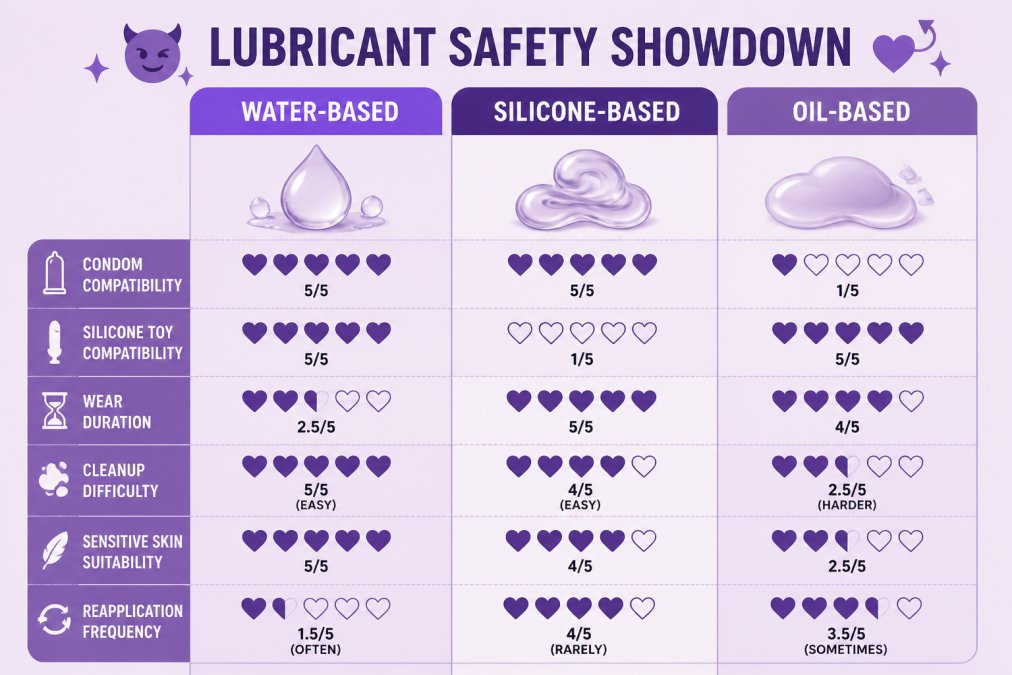
Condom and Toy Compatibility: What Plays Nice With What
Latex condoms and oil-based lubricant do not mix. Oil degrades latex within minutes, which turns your safety net into a decorative balloon. Water-based and silicone-based lubes are both latex-safe and polyisocyanurate-safe.
For toys, check the material before you squeeze. Silicone toys pair with water-based lube only. Glass, stainless steel, and ABS plastic toys work with any base. If you're not sure what your toy is made of, water-based is the zero-risk answer.
Is Glycerin Safe for Intimate Health? The Sticky Truth
Glycerin is generally safe for most people, but it's a sugar alcohol that some bodies react to with irritation or yeast overgrowth. If you're prone to bacterial vaginosis or recurring yeast infections, glycerin-free is the smarter bet.
Here's the mechanism, briefly: glycerin attracts water and makes a lube feel hydrating, which is lovely. It also feeds certain microorganisms. For a vulva with a balanced microbiome, that's usually a non-issue. For one that's already off-balance, it can tip things further. This is why "glycerin-free" appears on so many labels now, and why it's a genuine selling point rather than a marketing gimmick.
If you're shopping for a formula without it, both the Simply Natural Aloe Vera Lubricant and Simply Aqua skip glycerin, propylene glycol, and parabens entirely.

Ingredients to Avoid: Parabens, Flavors, and Other Party Crashers
The ingredient list is where body safe lubricants earn the name. Watch for these:
- Parabens (methylparaben, propylparaben): preservatives linked to irritation in sensitive users
- Glycerin and propylene glycol: sugar alcohols that can feed yeast
- Added flavors and warming agents: common triggers for burning and contact irritation
- Nonoxynol-9: a spermicide that disrupts mucosal tissue and increases infection risk
- High-osmolality formulations: can draw water out of mucosal cells and cause micro-tears
Best Ingredients for Sensitive Skin Lube (And How to Patch Test)
The best ingredients for sensitive skin lube are short lists, but "short" isn't the whole story. What matters is what's on the list and why it plays nice with mucosal tissue.
The gentle all-stars:
- Aloe vera: soothing, water-based, and mimics the slip of natural moisture without the sugar load of glycerin.
- Sodium hyaluronate (a form of hyaluronic acid): binds water and holds it against tissue, so it adds lasting moisture rather than just surface glide. A favorite for dryness-prone bodies.
- Carrageenan: a seaweed-derived thickener that some research suggests may have antiviral properties, though treat that as a nice bonus, not a guarantee.
- Olive leaf extract: antioxidant-rich and generally well tolerated, often used in place of synthetic preservatives.
What you won't find in a truly sensitive-skin formula: fragrance, essential oils, warming agents, glycerin, propylene glycol, and unnecessary preservatives. Fewer ingredients means fewer chances for a reaction, and fewer things to Google at 2am.
How to Patch Test a Lubricant (The 5-Minute Protocol That Saves a Week of Regret)
Most guides tell you to "test it first" and leave it there. Here's the actual protocol:
- Forearm first. Apply a dime-sized amount to your inner forearm. This is skin, not mucosa, so it's the gentle trial run.
- Wait 24 hours. Check for redness, itching, bumps, or a burning sensation. No reaction? Good sign.
- Move to the inner labia. Apply a small amount to the inner labia, not inside the vagina, and wait another 24 hours. Mucosal tissue reacts faster and harder than skin, so this is the real test.
- Full use, slowly. If both spots stay calm, you're cleared for the main event. Keep the bottle for at least three uses before deciding it's a keeper, some sensitivities are cumulative.
- If it stings, stop. Rinse with warm water (skip the soap), give yourself a day, and try a different formula. Discomfort is your body voting no, not a challenge to push through.
A good sensitive-skin lube reads like a short guest list: aloe, sodium hyaluronate, maybe carrageenan or olive leaf extract, and not much else. If you can't pronounce half the label, your mucosa probably can't either.
pH Balance, Osmolality, and Your Vaginal Microbiome
A healthy vaginal pH sits between 3.8 and 4.5, which is acidic enough to keep unwanted bacteria in check (peer-reviewed research). A lubricant with a mismatched pH can disrupt that environment and open the door to irritation or bacterial vaginosis.
Osmolality is the measure of how concentrated a fluid is compared to your body's own moisture. A lubricant with very high osmolality pulls water out of mucosal cells, which can cause micro-tears and increase susceptibility to irritation. Formulas that are pH-balanced and closer to physiological osmolality are gentler on vaginal tissue.
This is the part most buying guides skip entirely, and it's the one that matters most if you're prone to infections. The NIH overview of vaginal microbiome research has more on how pH and flora interact if you want the deep version.
Matching Your Lube to the Moment: Vaginal, Anal, and Beyond
Vaginal use calls for a pH-balanced, glycerin-free water-based formula, or a silicone-based option if you need long-lasting glide without reapplication. Anal use needs something thicker and longer-lasting, since that tissue doesn't self-lubricate at all.
Viscosity matters here. A thin, runny lube is fine for quick external play but disappears fast during anal penetration. A thicker gel cushions better and stays put. Silicone-based formulas are the classic anal pick for exactly this reason, though a thick water-based gel like Wicked Aloe Vera Lubricant holds its own with far easier cleanup.
| Use Case | Best Base | Why | Watch Out For |
|---|---|---|---|
| Vaginal | Water-based, pH-balanced | Mimics natural moisture, rinses clean | Glycerin if prone to infections |
| Anal | Silicone or thick water-based | Long-lasting cushion, no absorption | Silicone degrades silicone toys |
| Oral | Water-based, unflavored | Safe to ingest, no numbing agents | Flavors and warming additives |
| Toy play | Water-based | Safe with all toy materials | Silicone lube with silicone toys |
| Sensitive skin | Water-based, aloe-based | Short ingredient list, no fragrance | Preservatives and added flavors |
Lube for Every Life Stage: Perimenopause, Postpartum, and Beyond
Perimenopause and postpartum both bring vaginal dryness, and both call for a gentler, more hydrating formula than you might have used at 25. Falling estrogen levels thin the mucosal tissue and reduce natural lubrication, which makes friction more noticeable and irritation more likely.
Postpartum, especially if you're breastfeeding, dryness is common and temporary. A pH-balanced, glycerin-free water-based lube is the safest starting point, and a silicone-based option works well once you're cleared for penetration and want something longer-lasting. Pelvic floor changes after birth can also affect comfort, so go slow and reapply generously rather than pushing through discomfort.
For anyone in this stage, look for formulas with sodium hyaluronate, which binds water and adds lasting moisture rather than just surface slip.
The right lubricant for perimenopause or postpartum isn't about intensity. It's about hydration, pH balance, and a formula short enough that you can read every ingredient out loud.
Common Lube Mistakes to Avoid (Your Vulva Will Thank You)
The biggest mistake is treating lubricant as an afterthought and grabbing whatever's on the drugstore shelf. The second biggest is confusing "natural" with "safe," since botanical extracts and essential oils are frequent irritants.
Other repeat offenders:
- Using oil-based lube with latex condoms (it degrades them)
- Using silicone lube with silicone toys (it damages the surface)
- Skipping reapplication and pushing through friction
- Sharing a bottle without checking for contamination
- Ignoring a burning sensation and hoping it passes
If a lubricant stings, stop. Discomfort isn't a sign you need to try harder, it's a sign your body is voting no. Rinse with warm water, skip the soap, and give yourself a day before trying a different formula.
The hardest part of buying lubricant isn't finding one. It's finding one your body actually agrees with, and that takes a formula with a short, honest ingredient list and a base that matches what you're doing. The Flirty Femme stocks water-based options built around aloe vera, sodium hyaluronate, and olive leaf extract, all free from glycerin, propylene glycol, and parabens, with pH-balanced formulas suited to sensitive skin and every life stage. Browse the collection, read the labels, and pick the one that fits your body instead of the one with the loudest bottle. Shop All and find your new favorite.
Frequently Asked Questions
What ingredients should I avoid in personal lubricants?
Skip glycerin if you're prone to yeast infections, since it can feed sugar-loving bacteria. Avoid parabens and propylene glycol if you have sensitive skin. Steer clear of flavored or warming lubes for vaginal use, as they can disrupt pH. Nonoxynol-9 can cause irritation and micro-tears. Also ditch anything with petroleum or mineral oil if you're using latex condoms, since oil breaks down latex and renders your protection useless.
How can I tell if a lubricant is body-safe?
Check the label for pH-balanced formulas, glycerin-free and paraben-free claims, and recognizable ingredients like aloe vera or hyaluronic acid. Look for osmolality close to 300 mOsm/kg, which matches your body's natural fluids. A short ingredient list is usually a good sign. If the label is vague or loaded with unpronounceable chemicals, put it back. Reputable brands list every ingredient clearly, so you know exactly what's touching your most delicate parts.
Are water-based or silicone-based lubricants safer?
Both are safe when formulated well. Water-based lubes are versatile, condom-safe, and easy to clean up, but they dry out faster and may contain glycerin. Silicone-based lubes last longer and feel silkier, but they can't be used with silicone toys and require soap to remove. For sensitive skin or frequent UTIs, a glycerin-free water-based option is often the safer bet. Silicone works well for shower play or extended sessions. Your body, your call.
Can certain lubricants cause yeast infections or irritation?
Yes. Glycerin, high osmolality, and added flavors or warming agents are common culprits. Glycerin feeds candida, the yeast behind infections. Formulas with osmolality above 1,200 mOsm/kg can pull water out of mucosal tissue, causing dryness and micro-tears that invite bacteria. If you're prone to bacterial vaginosis or yeast infections, choose a glycerin-free, pH-balanced lube with minimal ingredients. Patch test on your inner wrist first, and stop using anything that causes burning or itching.