

How to Clean Silicone Toys Properly: 2026 Guide
Table of Contents
- Why Cleaning Silicone Toys Properly Matters More Than You Think
- What You'll Need: The Cleaning Kit for Silicone Toys
- Step-by-Step: How to Clean Silicone Toys After Every Use
- Can You Boil Silicone Toys? The Truth About Heat Sanitizing
- Finding the Best Toy Cleaner for Silicone: Sprays, Foams, and Soaps
- How to Store Sex Toys So They Stay Clean Longer
- Signs Your Silicone Toy Needs Retirement
- Your Silicone Toy Care Cheat Sheet
- Frequently Asked Questions
Last Updated: September 4, 2026
Why Cleaning Silicone Toys Properly Matters More Than You Think
Your favorite toy is non-porous, which sounds fancy, but it still collects bacteria, body fluids, and dust bunnies after every adventure. Skipping a proper wash doesn’t just risk your health; it degrades the silicone over time, leaving it sticky and less fun. Learning how to clean silicone toys properly is the difference between a toy that lasts for years and one that retires early. Consider this your no-judgment crash course in keeping things fresh.
Cleaning silicone toys means removing microbes, residue, and debris from non-porous surfaces using mild soap, warm water, or a dedicated toy cleaner. Skipping this step invites bacteria that can lead to irritation or infections. The good news? Silicone is one of the easiest materials to maintain, provided you avoid harsh chemicals and follow a consistent routine.

Silicone vs. Other Materials: Know What You're Working With
Not all toys are created equal. Silicone is non-porous, meaning it doesn't harbor bacteria like jelly, rubber, or TPE materials do. Those softer materials are porous, absorbing fluids and germs, making them nearly impossible to fully sanitize. If you're unsure what your toy is made of, check the packaging.
What You'll Need: The Cleaning Kit for Silicone Toys
Before you start scrubbing, gather your supplies. You don't need a lab setup, just a few basics:
- Warm water (not boiling, we'll get to that myth later)
- Mild, fragrance-free antibacterial soap, or a dedicated toy cleaner
- A lint-free cloth or paper towel for drying
- A clean, dry storage pouch or container
Avoid dish soap with degreasers, heavily scented body washes, and anything containing alcohol, parabens, or glycerin. These can strip silicone's integrity or leave irritating residue. A pH-balanced toy cleaner is your best friend.

Step-by-Step: How to Clean Silicone Toys After Every Use
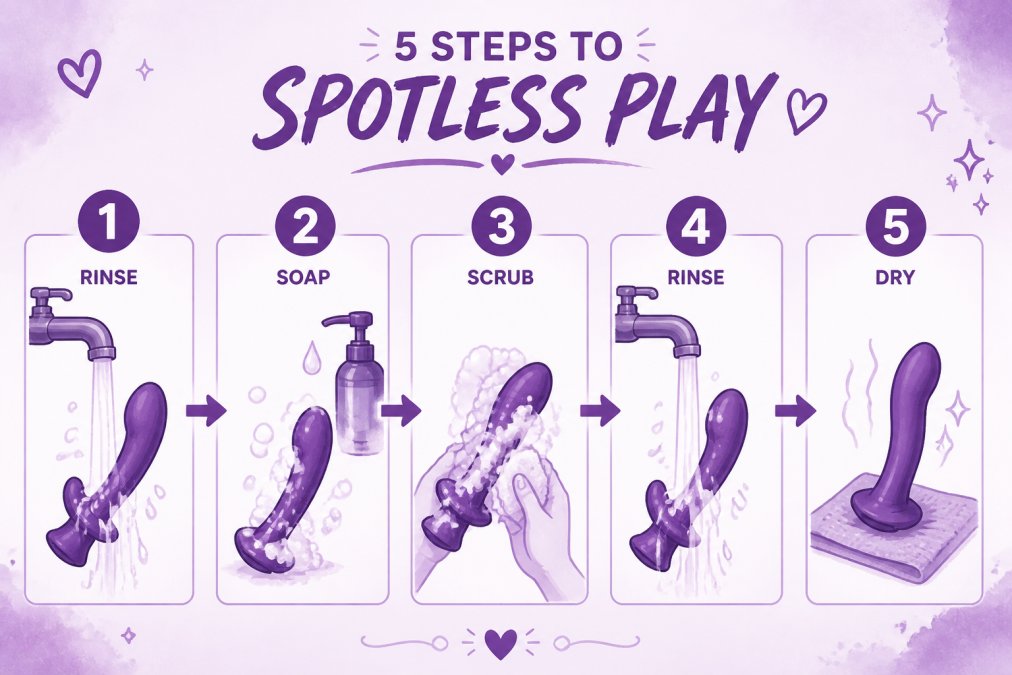
The golden rule is to wash your toy immediately after use, before fluids and bacteria have time to set up camp. Letting things sit for even an hour makes the job harder.
The Quick Rinse: Daily Maintenance
For everyday cleaning, start by rinsing the toy under warm, not hot, running water. Think bathwater temperature, around 90-100°F. Hot water is a slow cooker for silicone's molecular structure (peer-reviewed research).
Apply a small amount of mild soap or toy cleaner to your hands and gently work it over the entire surface. Pay special attention to:
- Ridges and ribs where fluids love to hide
- Textured or bumpy areas that create micro-crevices
- The base and any flared edges that often get neglected
- Insertable curves that need a little extra finger work
Use your fingers or a soft silicone brush (never abrasive scrubbers) to work the soap into every contour. Rinse thoroughly until no suds remain, leftover residue can cause irritation next time. Pat dry with a lint-free cloth or air dry completely before storing.
The Deep Clean: Weekly Sanitizing Routine
Once a week, or after every use if you're sharing toys between partners, it's time to bring out the big guns. Wash the toy with warm water and soap, then use a dedicated sanitizing spray or foam. These typically contain benzalkonium chloride or chlorhexidine, effective against bacteria, yeast, and some viruses without being harsh on silicone (PubMed).

Here's the move:
- Apply the sanitizer generously to the entire surface
- Let it sit for the full contact time listed on the label, usually 1-2 minutes, but some products need up to 10. Don't rush this; the clock is your friend.
- Rinse thoroughly with warm water to remove any chemical residue
- Air dry completely on a clean, lint-free towel
The Between-Partners Clean: Switching Things Up
If you're swapping partners mid-session or sharing toys with a friend, don't just wipe it off and call it good. That's how bacteria parties start. Wash thoroughly with soap and water, then hit it with a sanitizing spray. For extra peace of mind, consider using a condom on the toy when switching between partners.
The Texture-Specific Approach
Smooth toys are easy, a quick soap-and-water dance and they're done. But textured toys (ribbed, bumpy, or heavily veined) need more TLC. Use a soft-bristled brush (dedicated to your toys only, please) to work soap into the crevices. You can also soak textured toys in warm soapy water for 5-10 minutes to loosen anything stubborn. Just don't soak motorized toys.
What About Motorized Toys?
For vibrators and other electronic toys, never submerge the motor or charging port. Instead, use a damp cloth with soap or toy cleaner to wipe down the surface, being careful around seams and buttons. For the control panel area, spray cleaner on a cloth (not directly on the toy). If your toy has removable silicone sleeves or attachments, take those off and clean them separately.
The "Oops, I Fell Asleep" Protocol
We've all been there, the fun ends, you're blissed out, and sleep wins. If your toy sits overnight, don't panic. Rinse it thoroughly with warm water, then follow the deep clean steps above. A few extra hours won't ruin your toy, but be extra thorough.
Can You Boil Silicone Toys? The Truth About Heat Sanitizing
Yes, you can boil 100% medical-grade silicone, but only if it's body-safe, non-motorized, and free of electronics. Submerge the toy in boiling water for three to five minutes, then remove it with tongs and let it cool completely (the FDA). Boiling can degrade silicone over time, so reserve this for occasional deep sanitizing, not daily cleaning. For toys with motors, seams, or mixed materials, stick to soap and water or a spray cleaner.
Finding the Best Toy Cleaner for Silicone: Sprays, Foams, and Soaps
The best toy cleaner for silicone is fragrance-free, pH-balanced, and free of harsh chemicals like alcohol and parabens. Sprays are convenient for quick spritzes, foams offer thorough coverage for textured toys, and gentle soaps work well for everyday washes. Avoid anything with silicone-based ingredients, as they can break down the toy's surface over time.
How to Store Sex Toys So They Stay Clean Longer
Even a freshly washed toy can pick up bacteria if you toss it in a drawer with other toys or random clutter. How to store sex toys matters more than most people realize. Improper storage can ruin your toys, causing them to melt, warp, or become a breeding ground for microbes.
The Golden Rules of Toy Storage
Rule #1: Separate or Suffer
Silicone toys should never touch other silicone toys directly. Silicone can interact with other silicone materials, causing a chemical reaction that makes the surface sticky or even causes it to melt. This is called "silicone-on-silicone incompatibility." Store each toy in its own cotton pouch, or place a barrier between toys if they must share a drawer.
Rule #2: Cool, Dark, and Dry
Heat and UV light are silicone's enemies. Direct sunlight can break down silicone's molecular structure, causing it to become brittle or discolored. A hot bathroom cabinet or a windowsill might seem convenient, but both are terrible choices. Instead, aim for:
- Temperature: Below 75°F is ideal. Avoid attics, garages, or anywhere that gets hot in summer.
- Humidity: Moisture is a breeding ground for mold and bacteria. Keep toys in a dry environment, not a damp bathroom drawer.
- Light: Keep them out of direct sunlight. A nightstand drawer, a dedicated storage box, or a closet shelf all work well.
Rule #3: Airflow Matters
While you want to keep toys in a contained space, they need some airflow to stay completely dry. If you store a toy immediately after washing and it's even slightly damp, you're inviting mold to move in. Always let toys air dry completely, at least 30-60 minutes, before storing.
Storage Solutions That Actually Work
| Storage Option | Best For | Why It Works |
|---|---|---|
| Individual cotton pouches | Everyday storage | Breathable, prevents silicone-on-silicone contact |
| Hard-shell cases | Travel and protection | Rigid, prevents crushing and bending |
| Dedicated toy box with dividers | Collections | Keeps toys separated and organized |
| Original packaging | Short-term storage | Designed for the specific toy's shape |
| Glass or ceramic containers | Long-term storage | Non-reactive, easy to clean |
The Travel Dilemma: Keeping Toys Clean on the Go
Traveling with toys presents a unique challenge, you don't have your usual cleaning supplies, and you're working with limited space. Here's the travel protocol that keeps things hygienic:
- Pack a travel-sized toy cleaner (spritz bottles under 3.4 oz are TSA-friendly)
- Bring a dedicated travel pouch, don't just toss toys in with your socks
- Use condoms on toys during travel, they're a great barrier when you can't do a full clean
- If you're staying in a hotel, wash toys with the complimentary soap (most hotel soaps are mild and fragrance-free) and let them dry on a clean towel
- For quick cleanups, use a toy cleaning wipe, then follow up with a proper wash when you're back home
The Lubricant Connection: What Your Storage Choices Say About Your Lube
Here's something most guides miss: the type of lubricant you use affects how you should store your toys. Silicone-based lubricants can break down silicone toys over time, making the surface sticky and porous. If you use silicone lube, be extra thorough with cleaning and ensure toys are completely dry before storage. Water-based lubes are safer, but they can leave residue that attracts dust and lint, another reason to store toys in sealed pouches.
The "Out of Sight" Factor
Let's be real, storage isn't just about hygiene, it's also about discretion. A beautiful storage box that locks or a discreet pouch that looks like a makeup bag can solve both problems at once. You want toys accessible enough that you'll use them, but protected enough that they stay clean and private.
Seasonal Storage: What to Do With Toys You're Not Using
If you're storing toys long-term (maybe you're traveling for work or just taking a break), take extra precautions:
- Clean and dry thoroughly before storage
- Powder with cornstarch (not baby powder) to keep silicone from getting tacky, this is a trick used by silicone manufacturers themselves
- Wrap each toy in a cotton cloth before placing in a pouch
- Check on them every few months, if you notice any stickiness, wash and re-powder
- Store in a climate-controlled area, not an attic or basement where temperature fluctuates
With the right storage setup, your toys will stay fresh, clean, and ready for action whenever you are. Think of it as giving your favorite playthings a cozy, safe home, they'll reward you with years of reliable service.
Signs Your Silicone Toy Needs Retirement
Silicone is durable, but it's not immortal. Watch for these signs that your toy has reached the end of its lifespan:
- Sticky or tacky texture that doesn't wash off
- Visible tears, cracks, or holes where bacteria can hide
- Discoloration or a persistent odor that survives cleaning
- Changes in firmness, like becoming overly soft or brittle
If you notice any of these, it's time to say goodbye. Continuing to use a degraded toy risks irritation and infection. When disposing of it, check if your local recycling program accepts silicone, or wrap it securely before tossing it in the trash.
Your Silicone Toy Care Cheat Sheet
Here's the quick reference you'll actually want to bookmark:
| Task | Frequency | Best Method | Pro Tip |
|---|---|---|---|
| Quick rinse | After every use | Warm water + mild soap | Focus on textured areas |
| Deep clean | Weekly | Sanitizing spray or foam | Let cleaner sit for 1-2 minutes |
| Boil sanitize | Monthly or as needed | 3-5 minutes in boiling water | Only for 100% silicone, no motors |
| Dry | After every wash | Air dry on lint-free cloth | Avoid paper towels that leave lint |
| Store | Always | Separate cotton pouches | Keep away from other silicone toys |
Frequently Asked Questions
Can I clean silicone toys with rubbing alcohol?
Yes, you can use rubbing alcohol (isopropyl alcohol) to disinfect silicone toys, but only occasionally. Silicone is non-porous and alcohol won't degrade it like it can other materials. However, daily use of alcohol can dry out the silicone surface over time. Stick to mild soap and water or a dedicated toy cleaner for regular cleaning, and save the alcohol for a deeper sanitize when needed. Always rinse thoroughly after.
What is the best toy cleaner for silicone?
The best toy cleaner for silicone is one that's antibacterial, fragrance-free, and free from harsh chemicals like alcohol and triclosan. Look for pH-balanced formulas with natural ingredients like tea tree oil, lavender, or olive leaf extract. These clean effectively without damaging the silicone's material integrity. Avoid cleaners with parabens or glycerin, which can leave residue. A dedicated toy cleaner is gentler than regular soap and formulated specifically for intimate products.
Can you boil silicone toys to sanitize them?
Yes, you can boil 100% medical-grade silicone toys, but not all silicone toys are created equal. Check if your toy is explicitly labeled as body-safe, medical-grade silicone. If it has any motorized parts, batteries, or is not 100% silicone, do NOT boil it. For boilable toys: submerge in boiling water for 3-5 minutes, then let it cool completely before use. This method works great for deep sanitizing but isn't necessary for everyday cleaning.
How often should I deep clean my silicone toys?
You should give your silicone toys a quick clean after every single use, but a deep clean only needs to happen once a month or after sharing toys with a partner. Deep cleaning means boiling (if the toy is 100% silicone without electronics) or using a stronger disinfectant method. Regular cleaning with warm water and mild soap or toy cleaner is sufficient for daily hygiene and keeps bacteria and microbes from building up on the surface.
Keeping your silicone toys clean doesn't have to be a chore. With the right routine and a quality cleaner, like the fragrance-free options from The Flirty Femme, you'll protect your health, extend your toy's life, and keep every session feeling brand new. Ready to refresh your toy care kit? Shop The Flirty Femme's toy cleaners and get started today.
This article was written using GrandRanker