

Benefits of Natural Ingredients in Intimate Care
Table of Contents
- Why Natural Ingredients Are Winning in Intimate Care
- What Vaginal pH Balance Actually Means for Your Comfort
- How Often to Wash the Vulva (Spoiler: Less Than You Think)
- What to Look for in a Natural Intimate Wash
- Intimate Wash Ingredients to Avoid (Your Vulva Will Thank You)
- Reducing Irritation, Odor, and Everyday Discomfort
- The Bottom Line on Natural Intimate Care
- Frequently Asked Questions
Last Updated: October 14, 2026
Why Natural Ingredients Are Winning in Intimate Care
Your vulva has been handling its own business since puberty. It doesn't need a perfume counter down there.
That's the short version of why the benefits of using natural ingredients in intimate care keep coming up in group chats, TikTok comments, and every "am I doing this wrong?" Google search at 2 a.m. Here at The Flirty Femme, we talk to people every day who've been scrubbing, spritzing, and stressing over an area that mostly just wants to be left alone.
So what's the actual appeal of natural intimate care? Gentler ingredients, fewer irritants, and a formula that works with your body instead of against it.
What Vaginal pH Balance Actually Means for Your Comfort
Vaginal pH balance is the acid level of your vaginal environment, and it naturally sits in the acidic range (Vaginal pH Value for Clinical Diagnosis and Treatment of Common Vaginitis). That acidity is not a flaw.
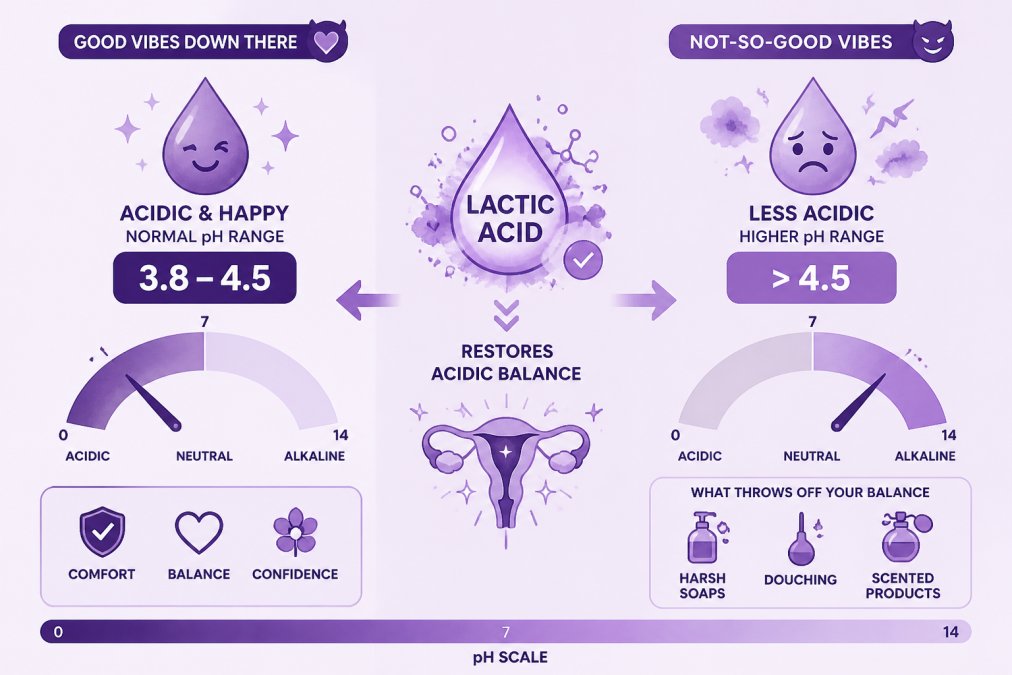
Here's the twist most guides skip: the vagina and the vulva are two different neighborhoods. The vagina is self-cleaning and keeps its own pH in check. The vulva, the external skin around it, is what you actually wash.
The Role of Lactobacillus and Beneficial Bacteria
Lactobacillus is the main type of beneficial bacteria that keeps your vaginal microbiome in check. It produces lactic acid, which holds that acidic pH in place.
When Lactobacillus is thriving, it crowds out the troublemakers that cause odor, irritation, and infection risk. When it's disrupted, things get less "fresh" and more "what is happening." That's why the goal isn't sterilization. It's balance.
How Often to Wash the Vulva (Spoiler: Less Than You Think)
Once a day is plenty for most people. Warm water alone does the job on lighter days, and a gentle, fragrance-free cleanser works when you want one. That's the whole assignment.
Here's the distinction that clears up 90% of the confusion: the vulva is the external skin, the labia, the clitoral hood, the outer opening. The vagina is the internal canal.
Over-washing is the mistake nobody warns you about. Scrubbing twice a day with scented body wash strips the natural oils that keep vulvar skin comfortable, and the resulting dryness and itching send you hunting for a stronger product, which makes it worse.
A simple routine that actually works:
- Wash the external area only, never inside the vagina
- Use lukewarm water, not hot, hot water strips oil and leaves skin tight and itchy
- Use your fingertips, not a washcloth or scrub brush; friction is the enemy here
- Rinse front to back so you're not dragging bacteria from the back door toward the front
- Pat dry with a clean towel instead of rubbing
- Skip scented soaps, bubble baths, and "feminine" sprays
- Change out of sweaty workout gear and damp swimsuits promptly, moisture is a party nobody wants to host
What Changes Across Life Stages
The basics hold, but a few contexts shift the details:
- Menstruation: Change pads, tampons, and cups on the schedule the product recommends. Blood can shift the vulvar environment temporarily; a gentle external rinse is fine, but skip anything scented.
- Pregnancy: Discharge and sensitivity often increase. Keep cleansing external and gentle, and run any new product past your prenatal provider.
- Menopause: Declining estrogen thins and dries vulvar and vaginal tissue, which can make it more reactive. A fragrance-free, pH-appropriate external moisturizer can help; a clinician can advise on options if dryness is persistent.
- Sensitive skin or a history of contact dermatitis: Treat every new product like a first date, patch test first, and keep the routine boring.
When It's Not Just a Washing Question
Ordinary odor or occasional irritation usually settles with gentle care. But some signals mean it's time to see a healthcare provider rather than reach for a stronger wash:
- Odor, itching, or discharge that sticks around more than a few days
- A change in discharge color or texture, or a strong fishy odor
- Burning, pain, or sores
- Symptoms that keep coming back after treatment
Natural intimate care supports everyday comfort. It does not treat bacterial vaginosis, a yeast infection, or an STI, those need actual medical treatment, and using a wash to "fix" them can delay the real fix. If something feels off for more than a few days, that's a clinician's job, not a cleanser's.
What to Look for in a Natural Intimate Wash
The best natural intimate wash is one with a short, recognizable ingredient list, no added fragrance, and a pH that respects your natural balance. Everything else is packaging. But "natural" on a label is a marketing word, not a safety guarantee, poison ivy is natural, and so is arsenic. So here's how to actually read the back of the bottle.
The Product-Selection Checklist
Run any intimate wash through these before it earns a spot in your shower:
- Fragrance-free, not just "unscented": "Unscented" can still contain masking fragrance. Look for "fragrance-free" and scan for "parfum," "fragrance," and "aroma" on the ingredient list.
- Formulated for external use: The label should say so. If it's meant to go inside, it's not for you.
- Acidic pH: Intimate skin sits in the acidic range, so a wash in that neighborhood is gentler than an alkaline bar soap.
- Gentle surfactants: Look for mild cleansing agents rather than harsh sulfates that strip oil.
- Transparent labeling: A brand that lists every ingredient and explains what each one does is a brand that expects you to read it. Vague "botanical blend" language tells you nothing.
- Minimal preservative load where possible: Some preservatives are necessary to keep a water-based product from growing bacteria, but a shorter, well-explained list beats a mystery cocktail.
Ingredients That Soothe and Support Sensitive Skin
Some ingredients earn their spot. Others are just filler with good PR.

- Lactic acid: helps maintain an acidic pH and supports the natural balance
- Aloe vera: calms and hydrates delicate skin
- Hyaluronic acid: pulls in moisture so skin feels soft instead of tight
- Probiotics: support the intimate microflora that keep things balanced
- Oat and colloidal oatmeal: soothing for reactive, itchy skin
- Botanical extracts: provide gentle, plant-based care for sensitive skin, but see the caveat below
If you want a shortcut, our Nourishing Drops blend hyaluronic acid, probiotics, and botanicals for daily external hydration. They're built to support pH balance and protect intimate microflora, which is exactly the kind of backup your skin appreciates.

The Natural-Ingredient Catch Nobody Mentions
Here's the part the "all-natural" crowd leaves out: natural does not automatically mean safer, and botanicals are a real source of contact allergy. Essential oils, plant extracts, and even some preservatives used in "clean" formulas can trigger irritation or a delayed allergic reaction in sensitive skin. Tea tree, lavender, and citrus oils are common culprits.
So the honest rule is: fewer ingredients, better-understood ingredients, and a patch test before anything touches delicate skin. A product with three boring, well-studied ingredients can beat a "luxury botanical blend" every time.
Ingredients to Avoid
- Synthetic fragrance and "parfum": a top cause of irritation and sensitive-skin flare-ups
- Harsh sulfates: they strip natural oils and leave skin dry and itchy
- Douches and scented sprays: they disrupt pH and the microbiome
- Glycerin in high amounts: can feed the wrong kind of bacteria for some people
- Antibacterial soaps: they don't distinguish good bacteria from bad
A common mistake is assuming "gentle" or "natural" on the front label means anything. Flip it over. The back tells the truth.
Intimate Wash Ingredients to Avoid (Your Vulva Will Thank You)
The biggest intimate wash ingredients to avoid are added fragrance, harsh sulfates, and anything designed to make you smell like a tropical vacation. Your vulva doesn't need a signature scent.
Watch for these on the label:
- Synthetic fragrance and "parfum": a top cause of irritation and sensitive skin flare-ups
- Harsh sulfates: they strip natural oils and leave skin dry and itchy
- Douches and scented sprays: they disrupt pH and the microbiome
- Glycerin in high amounts: can feed the wrong kind of bacteria for some people
- Antibacterial soaps: they don't distinguish good bacteria from bad
A common mistake is assuming "gentle" on the front label means anything. Flip it over. The back tells the truth.
Reducing Irritation, Odor, and Everyday Discomfort
Most irritation, odor, and discomfort trace back to disrupted pH and an unhappy microbiome, not to being "dirty." Fix the balance and the symptoms usually follow.
Odor management is really freshness management. When beneficial bacteria are in charge, things stay comfortable. When they're not, odor shows up and no amount of scented product will cover it for long.
A few habits that help:
- Wear breathable cotton underwear and change it daily
- Skip tight, non-breathing fabrics for long stretches
- Rinse and change after sweating or sex
- Use a gentle, pH-balanced wipe for on-the-go freshness instead of a scented spray
- See a healthcare provider if odor, itching, or discharge sticks around, since infections need real treatment, not a better-smelling wash
That last one matters. Natural intimate care supports everyday comfort. It doesn't treat bacterial vaginosis or a fungal infection. If something feels off for more than a few days, that's a clinician's job, not a cleanser's.
The Bottom Line on Natural Intimate Care
Natural ingredients in intimate care work because they respect the system that's already there. Gentle cleansers, soothing botanicals, and pH-aware formulas support your natural balance instead of fighting it. Harsh chemicals, fragrance, and over-washing do the opposite, and your skin will file a complaint.
If you want products built around that idea, that's our whole thing. The Flirty Femme curates intimate wellness picks designed to support comfort and confidence, from Nourishing Drops for daily hydration to Sweetums Intimate Flavored Wipes for freshening up on the go. Both are pH-balanced and made for external use.
Frequently Asked Questions
What do women use to clean their private area naturally?
Plain warm water and a gentle, fragrance-free cleanser are enough for most people. The vulva cleans itself through natural secretions, so harsh scrubbing or chemical-heavy washes can do more harm than good. Look for products with soothing botanicals like aloe vera or lactic acid that support your natural pH. A soft cloth and lukewarm water handle daily freshness without stripping your skin's protective barrier.
How do I balance my pH and smell good down there?
Your vagina maintains its own acidic pH (around 3.8 to 4.5) through beneficial bacteria. To support it, avoid douching, skip heavily fragranced soaps, and choose breathable cotton underwear. A natural intimate wash with lactic acid can help maintain balance externally. If odor persists despite good hygiene, see a healthcare provider because it may signal an infection that needs treatment, not just a stronger wash.
Are natural intimate care products safer for sensitive skin?
Natural ingredients often contain fewer synthetic fragrances and harsh surfactants that trigger irritation. Botanical ingredients like aloe vera are known for their soothing properties. That said, natural does not automatically mean hypoallergenic. Even plant-based ingredients can cause reactions in some people. Patch-test new products on your inner arm first, and check the full ingredient list if you have known allergies or sensitivities.
Can natural intimate care products prevent irritation or infection?
Gentle, pH-balanced formulas can reduce irritation risk by avoiding harsh chemicals that disrupt your microbiome. However, no product prevents infections like bacterial vaginosis or fungal infections on its own. Natural intimate care supports your body's self-cleaning mechanism and comfort, but if you notice persistent itching, unusual discharge, or odor, that warrants a clinical assessment rather than a new wash.
Your intimate skin deserves better than whatever's on sale at the drugstore. At The Flirty Femme, we stock pH-balanced body care, gentle wipes, and curated bundles so you can build a routine that actually respects your body. Shop the collection and find your new favorites.