

Discreet Shipping for Intimate Wellness: The Complete Guide
Table of Contents
- What Does Discreet Shipping Actually Mean?
- How Plain Packaging Protects Your Privacy
- Billing Descriptor Privacy: What Your Bank Statement Won't Say
- Shipping Carriers and Delivery Methods That Keep Things Quiet
- How to Return Intimate Wellness Products Discreetly
- Red Flags: Retailers That Don't Actually Protect Your Privacy
- Smart Delivery Options for Maximum Discretion
- Conclusion
Last Updated: August 28, 2026
What Does Discreet Shipping Actually Mean?
Discreet shipping for intimate wellness products means your order arrives in plain, unmarked packaging with no visible indication of what's inside. No product names on the box. No suggestive imagery. No clues that would make a delivery driver, roommate, or nosy neighbor wonder what you're getting.
But here's where most retailers get it wrong: they think "discreet" just means using a brown box. Real discreet shipping is a complete privacy system, from the moment you click buy to the second the package lands at your door. It includes what your credit card statement says, how the return address is labeled, which carrier delivers it, and whether your data gets sold to third parties.
At The Flirty Femme, we treat discretion as a non-negotiable part of the shopping experience. It's not a feature we advertise loudly. It's the baseline. When you order from us, you're not just getting products, you're getting peace of mind.
The difference between "discreet" and actually discreet comes down to how retailers handle four things: packaging, billing, shipping logistics, and data security. Get one of these wrong, and your privacy is compromised before the box even ships.
How Plain Packaging Protects Your Privacy
Plain packaging is the visible part of discretion, and it matters more than you'd think. A truly discreet box tells the delivery driver nothing. It tells your neighbors nothing. It tells anyone who might handle it nothing.
The standard for plain packaging means:
- No product names, brand logos, or identifying marks on the exterior
- No images that hint at what's inside
- Neutral colors (typically brown, white, or beige)
- Generic return address with the retailer's business name only, not "adult wellness" or anything cutesy
- Inner packaging that protects products from damage while keeping everything quiet
Some retailers use what they call "beauty-grade packaging", basically, if it arrived at your door, it could be skincare, supplements, or anything else. That's the standard you want. If someone had to open it to know what's inside, the packaging is doing its job.
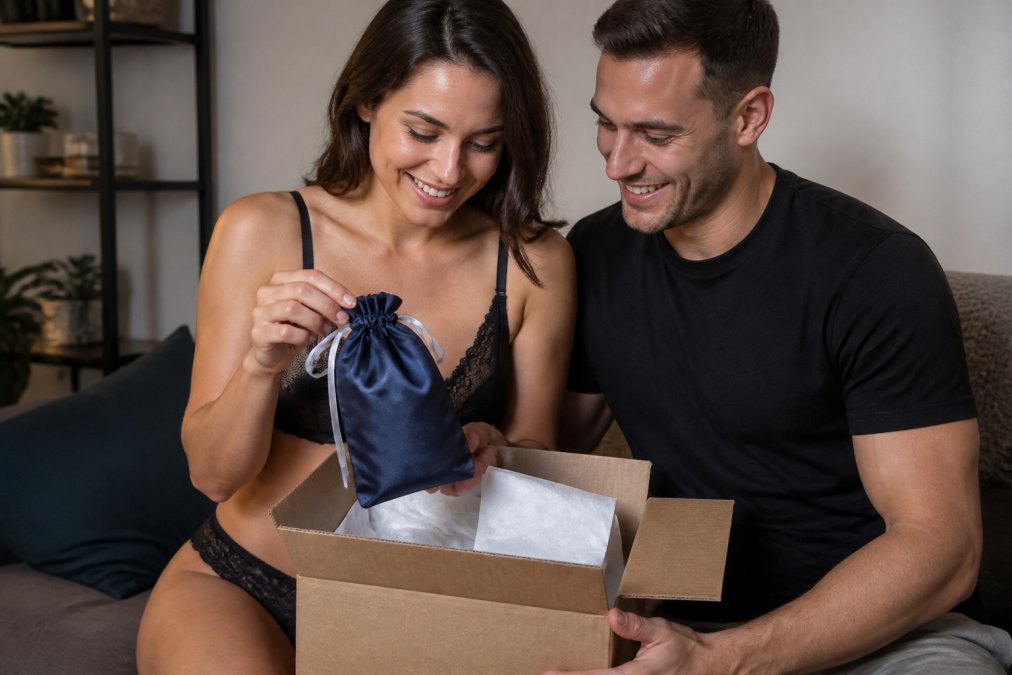
The inside matters just as much. Your products should arrive in individual pouches or wrapping that keeps them separate and protected. This serves two purposes: it prevents damage during shipping, and it means if the outer box is opened, there's still a layer of privacy. Bubble mailers, tissue wrapping, and unbranded pouches are standard for legitimate retailers.
Watch out for retailers that skimp on inner packaging. If your products arrive loose in a box with minimal wrapping, that's a sign they're cutting corners on privacy, and probably on product protection too.
:::pro_tip Look for retailers that use multiple layers of packaging. Outer box → inner wrapping → individual product pouches. Each layer adds privacy and protection. :::
Billing Descriptor Privacy: What Your Bank Statement Won't Say
This is where a lot of people get blindsided. You order something from a retailer with a discreet name, but then your bank statement shows something completely different, something that makes you wince every time you see it.
The billing descriptor is the name that appears on your credit card or bank statement. It's controlled by the merchant, not your bank. Some retailers use their actual company name. Others use a parent company name. A few use intentionally vague descriptors designed to hide what you bought.
The best retailers use a neutral business name on billing statements. Something that could be literally anything. Look for billing descriptors like:
- The company's actual name (if it's generic enough)
- A parent company name that doesn't scream "adult products"
- A deliberately vague business descriptor
The worst retailers use descriptors like "ADULT WELLNESS LLC" or "INTIMATE RETAIL CO", which defeats the entire purpose of ordering discreetly in the first place. Your partner, roommate, or family member might see that statement.
Supporting keyword mention: billing descriptor privacy is something most people don't think about until it's too late. When you're evaluating a retailer, ask directly: What will appear on my bank statement? If they won't tell you, that's a red flag.
Shipping Carriers and Delivery Methods That Keep Things Quiet
Not all shipping carriers are created equal when it comes to discretion. Some have better tracking systems. Some are more likely to leave packages in visible locations. Some scan packages in ways that could expose contents.
The major carriers, USPS, UPS, and FedEx, all offer standard delivery (usps.com). The difference is in execution. USPS tends to be the quietest option because mail carriers deliver to mailboxes or front doors as a routine matter (usps.com). UPS and FedEx drivers often leave packages in more visible spots, and their tracking can be more detailed.
For maximum discretion, look for retailers that offer:
- USPS Priority Mail: Delivered to your mailbox or in a plain envelope. The most discreet standard option.
- Signature-required delivery: Ensures the package goes directly to you, not left on a porch.
- Scheduled delivery windows: You know exactly when it's arriving and can be home to receive it.
- Discreet carrier selection: Retailers that specifically choose carriers known for privacy-conscious handling.
Some retailers partner with specialty shipping companies that specialize in sensitive items. These services prioritize discretion at every step, from how packages are labeled to how drivers are trained to handle deliveries.
The worst option is standard ground shipping left at your door with no signature required. That's how packages get stolen, left in visible spots, or opened by curious household members.
How to Return Intimate Wellness Products Discreetly
Returns are where discretion often falls apart. You've got a product that didn't work out, and now you have to send it back. The process can feel more awkward than the original purchase.
The supporting keyword how to return intimate wellness products matters because a good return process is part of the full discretion experience. Here's what discreet returns look like:
Step 1: Check the return policy before buying. Legitimate retailers make returns simple and don't require you to jump through hoops. You should be able to initiate a return online without having to call or email with details about what you're returning.
Step 2: Get a prepaid return label. The retailer should email you a prepaid shipping label. You don't want to have to go to a shipping store and explain what you're returning. Prepaid labels mean you drop it in a mailbox or UPS box, no questions asked.
Step 3: Repackage discreetly. Use the original packaging if possible, or ask the retailer for return packaging. Don't use a box that screams what's inside. Plain packaging applies to returns too.
Step 4: Confirm the return address is generic. Before you ship anything back, check that the return address doesn't say "Adult Products Returns" or anything similar. It should be a standard business address.
Step 5: Track the return. The retailer should provide tracking so you can confirm it arrived. This protects you in case there's a dispute about whether the return was received.
The red flags for return processes:
- Retailers that require you to call to arrange a return
- No prepaid labels (you have to pay for return shipping)
- Return addresses that are obviously adult-oriented
- Unclear refund timelines
- No tracking on returns
At The Flirty Femme, returns are handled the same way orders are, with complete privacy. You get a prepaid label, discreet packaging, and a straightforward refund process. No judgment. No awkwardness.
| Return Process Element | What to Look For |
|---|---|
| Initiation | Online form, no required explanation |
| Prepaid Label | Yes, always |
| Return Packaging | Plain, unmarked box or mailer |
| Return Address | Generic business name only |
| Tracking | Provided automatically |
| Refund Timeline | 5-10 business days after receipt |
Red Flags: Retailers That Don't Actually Protect Your Privacy
Not every retailer that claims to offer discreet shipping actually delivers on that promise. Some cut corners. Some are outright deceptive. Here's what to watch for.
Red flag #1: Vague privacy policies. A real privacy policy tells you exactly what happens to your data. Where is it stored? Who has access? How long is it kept? If the policy is vague, uses corporate jargon, or doesn't answer these questions, that's a sign the retailer doesn't take privacy seriously.
Red flag #2: Packaging that still looks suspicious. If the box arrives and it's obvious what's inside, whether through weight, shape, or subtle branding, the retailer isn't doing discretion right. A truly discreet box is indistinguishable from any other package.
Red flag #3: Billing descriptor that reveals too much. If the retailer won't tell you what appears on your bank statement, or if the descriptor is obviously adult-oriented, move on. This is a dealbreaker.
Red flag #4: No signature option. A retailer that doesn't offer signature-required delivery is saying they don't care if your package sits on your porch for hours. That's not discreet.
Red flag #5: Unclear return process. If returns are complicated, require explanation, or don't offer prepaid labels, the retailer is making privacy harder, not easier.
Red flag #6: Data selling or marketing consent. Some retailers claim they don't sell data but then bury consent language in their terms. Read carefully. If they're selling your email to "partners," that's a privacy violation.
Red flag #7: No SSL encryption or outdated website. If the checkout page doesn't have a padlock (HTTPS), your payment information isn't secure (cisa.gov). If the website looks like it hasn't been updated since 2015, that's a sign the retailer isn't invested in modern security.
Red flag #8: Overseas hosting or unclear company location. Retailers based outside the country may not comply with privacy laws. Look for a clear company address and customer service contact.
The gold standard: retailers that are transparent about their privacy practices, offer multiple discreet shipping options, and make it easy to contact them with questions.
Smart Delivery Options for Maximum Discretion
Beyond standard shipping, there are delivery methods specifically designed for privacy. These aren't available everywhere, but they're worth seeking out if discretion is your top priority.
Amazon Lockers and similar pickup services. Some retailers partner with Amazon Lockers or other package pickup locations. You get your package delivered to a secure locker, and you pick it up on your own schedule. No one sees what you're receiving. This is ideal if you're concerned about household members or porch visibility.
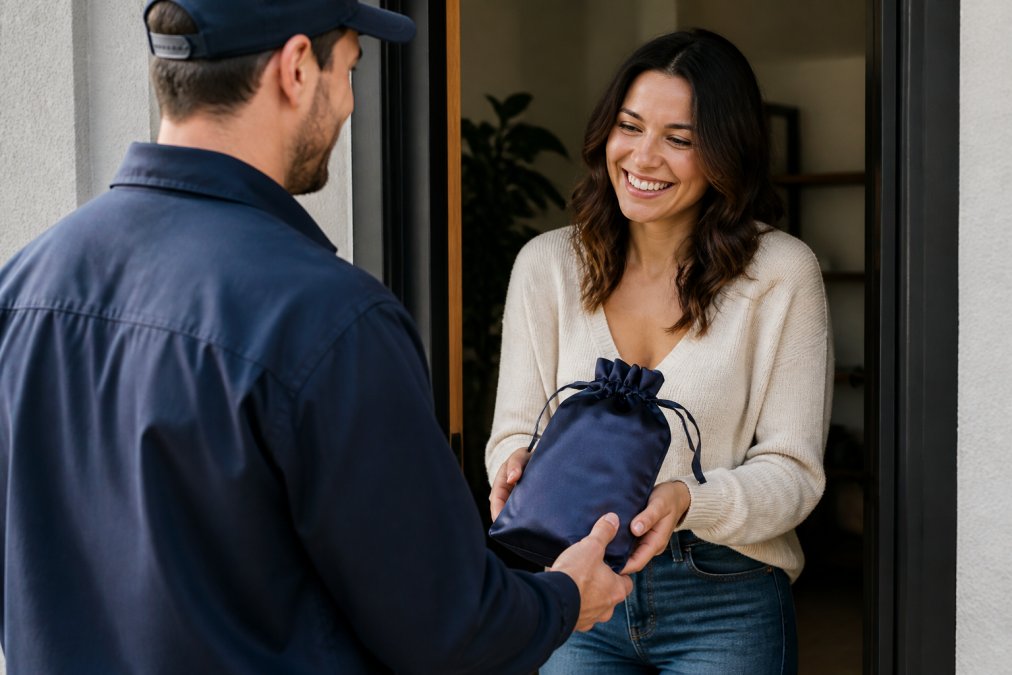
Scheduled delivery windows. Instead of a random delivery time, you choose a specific window. You know exactly when the package is arriving and can be there to receive it. This eliminates the risk of it sitting on your porch.
Signature-required delivery. The package goes directly to you, not left unattended. It's slightly more inconvenient, but it guarantees privacy. No one else can sign for your package.
Discreet carrier partnerships. Some retailers work with specialty carriers that specialize in sensitive shipments. These services train drivers specifically on how to handle deliveries discreetly, ringing the doorbell, waiting for you to answer, handing it directly to you.
International customs and cross-border privacy. If you're ordering from outside the country, customs forms can expose what's inside. Look for retailers that handle customs documentation carefully. They should use generic product descriptions on customs forms (like "personal care items" instead of specific product names). This is a huge privacy concern that most guides miss.
Smart home delivery risks. If you have a smart home system, be careful about delivery notifications. Some systems send alerts to multiple household members or create logs that others can access. Consider disabling shared notifications for deliveries, or use a pickup option instead.
The best retailers offer a combination of these options. You should be able to choose the delivery method that works best for your privacy needs, not just for the retailer's convenience.
Conclusion
Discreet shipping for intimate wellness products is about more than just a plain box. It's a complete privacy system that covers packaging, billing, shipping, returns, and data security. When you're evaluating a retailer, check all four corners: Does the packaging hide what's inside? Does the billing descriptor protect your privacy? Are the shipping options flexible? Is the return process straightforward?
The Flirty Femme handles discretion the right way. We use plain, unmarked packaging. We keep billing descriptors generic. We offer multiple shipping options so you can choose what works for your situation. And we make returns as easy and private as the original purchase. When you order from us, privacy isn't an afterthought, it's built in.
Ready to shop with complete peace of mind? Explore our full collection at The Flirty Femme, and don't forget to protect your toys with our Toy Tote, discreet storage that keeps your favorite products safe, clean, and completely out of sight.


Frequently Asked Questions
Is discreet shipping for intimate wellness products actually legal?
Yes, absolutely. Shipping intimate wellness products is completely legal in the United States when the retailer complies with FDA regulations for personal care items and follows state laws. Discreet shipping itself is a standard business practice that protects customer privacy, there's nothing illegal about it. The key is that retailers must be transparent about their privacy policies and comply with data protection standards.
Will my bank statement reveal what I ordered?
Not if the retailer uses proper billing descriptor privacy practices. Your credit card statement shows the merchant name, not the product details. Reputable retailers use neutral company names or generic descriptors on billing statements, for example, you might see 'wellness retail' instead of the actual product name. Always check a retailer's billing privacy policy before ordering to confirm they mask descriptors.
How can I tell if a retailer actually offers truly discreet shipping?
Look for these specifics in their shipping policy: unmarked or plain packaging language, non-descriptive return address labels, and explicit privacy commitments. Check their FAQ or privacy policy for mentions of 'plain packaging,' 'unmarked box,' or 'confidential delivery.' Read customer reviews mentioning discretion. Avoid retailers that are vague about packaging or don't address privacy at all. The Flirty Femme, for example, prioritizes customer anonymity through non-descriptive labeling and secure checkout practices.
What should I do if I want the package delivered somewhere other than my home?
Many retailers allow delivery to alternative addresses like workplaces, friend's homes, or Amazon lockers, just check during checkout. Some carriers offer package holding services where you can pick up at a local facility instead of home delivery. For maximum privacy, using a neutral delivery location can reduce the risk of questions from household members. Always confirm the retailer and carrier support your preferred delivery method before placing your order.
This article was written using GrandRanker