

Best Silicone Based Lubricants for Couples in 2026
Table of Contents
- Quick Comparison: Best Silicone Based Lubricants for Couples
- Simply Timeless Silicone: Best for Menopause and Dryness
- Wicked Ultra Silicone: The Fragrance-Free Workhorse
- Wicked Ultra Silicone Chill and Heat: Sensory Add-Ons
- UberLube: The Bedside Table Staple
- Backdoor 101 Bundle: A Beginner's All-in-One Kit
- Is Glycerin Safe for Intimate Health? What Couples Should Know
- Silicone Lubricant and Toy Compatibility: What Not to Ruin
- How to Remove Silicone Lubricant from Fabric
- The Bottom Line
- Frequently Asked Questions
Last Updated: September 14, 2026
Quick Comparison: Best Silicone Based Lubricants for Couples
Silicone based lubricants are the marathon runners of the bedroom: they don't evaporate, they don't get tacky, and they keep going long after water-based formulas have tapped out. For couples who are tired of reaching for the bottle every four minutes, this is your upgrade. At The Flirty Femme, we've watched shoppers scroll past endless "best of" lists and land on the same question: which one actually works for us? Below, we break down the five best silicone based lubricants for couples, plus the two things nobody warns you about: toy damage and sheet stains.
Quick Picks:
- Best for Menopause and Dryness: Simply Timeless Silicone, formulated with aloe, olive leaf extract, squalane, and Vitamin E
- Best Fragrance-Free Workhorse: Wicked Ultra Silicone, no additives or fillers
- Best Sensory Add-Ons: Wicked Ultra Silicone Chill and Heat, $32 each
- Best Bedside Table Staple: UberLube, the elegant glass bottle
- Best Beginner Kit: Backdoor 101 Bundle, an all-in-one starter set
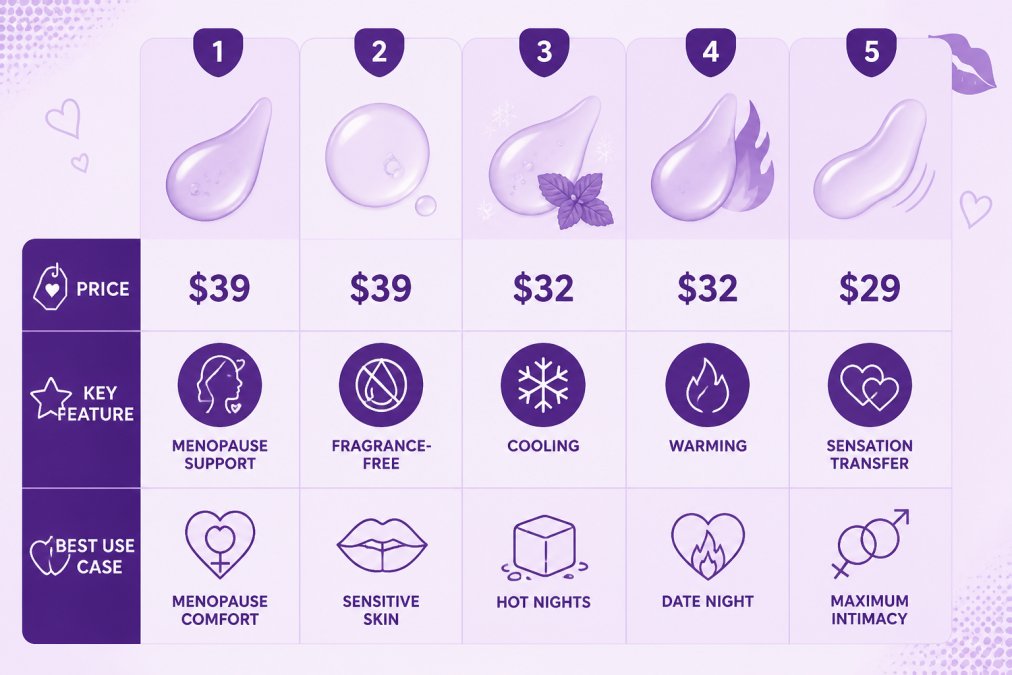
| Product | Price | Key Feature | Best For |
|---|---|---|---|
| Simply Timeless Silicone | $39.00 | Aloe, squalane, Vitamin E | Menopause and dryness |
| Wicked Ultra Silicone | $39.00 | Fragrance-free, no fillers | Sensitive skin |
| Wicked Ultra Silicone Chill | $32.00 | Cooling extracts | Heightened sensitivity |
| Wicked Ultra Silicone Heat | $32.00 | Warming extracts | Sensory play |
| UberLube | $29.00 | Sensation transfer | Everyday use |
Simply Timeless Silicone: Best for Menopause and Dryness
Hormonal shifts change everything, including how your body lubricates itself. Simply Timeless Silicone was built for exactly that chapter, with supportive ingredients like aloe, olive leaf extract, squalane, and Vitamin E rather than the glycerin, parabens, and propylene glycol found in plenty of mainstream formulas. It's a lightweight silicone lube designed for long-lasting play, and the ingredient list is the whole point.

The one honest limitation: it's still silicone, so keep it away from silicone toys. For everyone else, this is the pick that treats dryness as a real issue instead of an inconvenience.
Wicked Ultra Silicone: The Fragrance-Free Workhorse
Fragrance-free sounds boring until you've had a scented lube ruin the mood with a chemical aftertaste. Wicked Ultra Silicone contains no additives or fillers, just a velvety formula that stays smooth without feeling heavy, greasy, or tacky. It's also waterproof, which makes it a solid choice for water play. If you've ever had a reaction to a "sensual" scent blend, this is the safe harbor.

Wicked Ultra Silicone Chill and Heat: Sensory Add-Ons
Temperature play is the underrated third act of foreplay. Wicked Ultra Silicone Chill delivers a tingling blend of cooling extracts that heightens sensitivity, while Wicked Ultra Silicone Heat sends waves of warmth across pleasure zones. Both run on high-quality silicone, so the glide lasts as long as the sensation does.

A word of caution: warming and cooling formulas are not the move for anyone with sensitive skin or a tendency toward irritation. Start with a small patch test on your inner wrist before the main event.
UberLube: The Bedside Table Staple
UberLube is the one your friend whispers about at brunch. It's designed to transfer sensation while safely reducing friction, never wet or sticky, and it comes in a glass bottle that looks genuinely good sitting out. That matters more than people admit: a lube you're not embarrassed to leave on the nightstand is a lube you actually use.
Backdoor 101 Bundle: A Beginner's All-in-One Kit
Anal play has a steeper learning curve than most couples expect, and the biggest mistake is going in under-lubricated. The Backdoor 101 Bundle pairs an Anal Trainer Set and Anal Relaxing Gel with UberLube Silicone Lube, so you're not assembling a starter kit from scratch. Silicone is the right base here because it doesn't absorb or dry out mid-session.
Is Glycerin Safe for Intimate Health? What Couples Should Know
Glycerin is generally considered safe for most people, but it's a sugar alcohol that some users find irritating, and it can feed yeast in people prone to infections. If you're asking whether glycerin is safe for intimate health, the honest answer is: it depends on your body. Anyone dealing with recurrent yeast infections or sensitive skin may want a glycerin-free formula instead.
This is also where osmolality matters. Formulas with high osmolality can draw moisture out of vaginal tissue rather than adding to it, which works against the whole point (pubmed.ncbi.nlm.nih.gov). Glycerin-free, pH-balanced options like Simply Timeless Silicone sidestep the issue entirely.
Silicone Lubricant and Toy Compatibility: What Not to Ruin
Here's the chemistry in one breath: silicone lube is made of silicone oil (usually dimethicone, cyclomethicone, or a dimethicone blend), and silicone toys are also made of silicone (pubmed.ncbi.nlm.nih.gov). Like dissolves like. Leave the two pressed together and the lube starts migrating into the toy's surface, which is why a once-smooth toy comes out of the drawer looking like it survived a bad breakup, tacky, gummy, sometimes permanently scarred.
That's the headline. The nuance is where most guides leave you hanging:
- Platinum-cure silicone toys: The most resistant to swelling, but "resistant" is not "immune." Long exposure still dulls the finish. Don't gamble on your favorite.
- Tin-cure and cheap silicone blends: Softer, more porous, and the first to go sticky. If the toy was a impulse buy with no material listed, assume it's in this bucket.
- TPE, TPR, jelly, and elastomer toys: These are porous and break down over time no matter what you put on them. Silicone lube won't dissolve them the way it does silicone, but it will sit in the pores and harbor bacteria. Water-based is the safer call.
- Glass, stainless steel, and hard ABS plastic: Fully compatible. Silicone lube is actually the better choice here because it won't dry out mid-session.
- Silicone toys with a matte or "soft-touch" coating: The coating is often a silicone-based finish. Same rule applies.
The 10-Second Patch Test
Not sure what your toy is made of? Rub a drop of silicone lube on a spot you don't use, the base, the suction cup, the underside of a flange. Wait 10 minutes, wipe it off, and check for a dull spot or a sticky patch. If the surface changed, you have your answer. If it didn't, you still want to wash the lube off rather than store the toy coated in it.
The Two-Bottle System (And Why It's Not Overkill)
Couples who own a mix of toys end up with two bottles on the nightstand: silicone for skin, glass, and steel; water-based for anything silicone or porous. Label them if you have to. The five seconds you save grabbing the wrong one is not worth destroying a toy you love, and yes, we know exactly how that sentence reads.
One more thing worth knowing: silicone lube is the only lube category that stays put in the shower, the tub, or the pool. Water-based formulas rinse away in seconds. If your toy is glass or steel and you're playing somewhere wet, silicone is the one that shows up.
How to Remove Silicone Lubricant from Fabric
Silicone lube is not oil-based in the way cooking oil is, it's a silicone polymer, which means it doesn't break down with the same surfactants that lift grease. That's why the standard "dish soap and cold water" advice gets you halfway and then stalls. Here's the full playbook, ranked by how fast you move.
The Golden Window: First 15 Minutes
Blot, don't rub. Rubbing pushes the silicone deeper into the weave and spreads the stain. Use a clean, dry cloth and press. Then:
- Sprinkle cornstarch or baking soda on the spot and let it sit for 10 minutes. It pulls surface silicone out of the fabric before it sets.
- Scrape off the powder with a credit card or spoon, not your fingernail, which just pushes it back in.
- Apply a grease-cutting dish soap (the kind that cuts through bacon fat) directly to the spot. Work it in with your fingers or a soft brush.
- Rinse with cold water. Hot water sets silicone the same way it sets oil-based stains.
If the Stain Has Dried
Dried silicone is stubborn but not permanent. The trick is breaking the polymer chain before you wash:
- Rubbing alcohol (isopropyl): Apply to a cotton ball, dab the stain, and let it sit for 2-3 minutes. The alcohol softens the silicone so the detergent can lift it. Test on an inside seam first, alcohol can fade some dyes.
- Repeat the dish soap step after the alcohol, then launder on a normal cold cycle.
- Air dry only. The dryer is where stains become permanent. If you can still see the spot after one wash, repeat the alcohol-and-soap cycle before it ever sees heat.
Fabric-by-Fabric Reality Check
- Cotton sheets and towels: Most forgiving. The routine above usually works in one pass.
- Microfiber and performance fabrics: The fibers trap silicone in a way cotton doesn't. Expect two or three cycles.
- Silk and satin: Do not DIY this. Alcohol will damage the finish and dish soap can strip the sheen. Take it to a dry cleaner and tell them it's a silicone stain, not an oil stain, the solvent they use is different.
- Mattress protectors and waterproof blankets: Usually machine-washable and the easiest save of the bunch. This is also the argument for owning one.
The Prevention Move That Actually Works
A waterproof throw blanket or a dedicated towel under you solves the problem before it starts. It's the least romantic purchase you'll ever make and the one you'll thank yourself for at 2 a.m. when you're not scrubbing a fitted sheet.
The Bottom Line
Silicone based lubricants reward couples who plan ahead: they last, they glide, and they don't need a mid-scene refill. The catch is knowing which formula fits your body and which toys can handle it. Browse the full silicone collection at The Flirty Femme and find your new favorite.
Frequently Asked Questions
Why is silicone-based lubricant better for long sessions?
Silicone lubricant doesn't absorb into skin or evaporate the way water-based formulas do, so a single application can last through an entire session without reapplication. It stays slippery and smooth rather than turning tacky. For couples who want fewer interruptions, that long-lasting glide is the main draw. It's also waterproof, so it works in the shower or bath without washing away.
Is silicone-based lubricant safe to use with silicone toys?
Silicone lubricant can degrade silicone toys over time, causing them to become sticky or develop surface damage. The general rule is to keep silicone lube away from silicone toys and use a water-based option instead. If you're unsure what your toy is made from, check the packaging or test a small spot first. Glass, stainless steel, and ABS plastic toys are all fine with silicone lube.
How do I clean silicone-based lubricant off my sheets?
Silicone lube doesn't dissolve in water, so regular washing alone may not lift it. Pretreat the stain with a grease-fighting dish soap, let it sit for 10 to 15 minutes, then wash in the hottest water the fabric can handle. For stubborn marks, apply rubbing alcohol to a cloth and dab the area before washing. Avoid putting stained sheets in the dryer until the spot is gone, since heat can set the residue.
Is glycerin safe for intimate health in lubricants?
Glycerin is a common humectant that draws moisture, but it's also a sugar alcohol that some people find irritating or that may feed yeast. If you're prone to yeast infections or have sensitive skin, a glycerin-free formula is the safer bet. Many silicone lubricants, including the ones on this list, skip glycerin entirely. Check the ingredient label if this is a concern for you.
Can silicone-based lubricant cause irritation?
Most people tolerate silicone lubricant well, but reactions can happen. Some formulas contain added ingredients like cooling agents, warming extracts, or fragrance that may trigger sensitivity. If you have reactive skin, start with a plain fragrance-free and glycerin-free option. Patch test on your inner wrist before using it anywhere more adventurous, and stop if you notice burning, itching, or redness.
The best silicone based lubricants for couples solve two problems at once: they keep the glide going and they respect your body's chemistry. The Flirty Femme carries a curated range built around exactly that, from menopause-friendly Simply Timeless Silicone to the sensory thrill of Wicked Ultra Silicone Chill and Heat, plus beginner-friendly bundles for couples testing the waters. Shop All and find the bottle that earns its spot on your nightstand.