

7 Ways to Increase Clitoral Sensitivity Naturally
Table of Contents
- 1. Start With Touch: Clitoral Stimulation Techniques That Wake Things Up
- 2. Add Lubricant, Because Dry Friction Kills Sensation
- 3. Try a Clitoral Sensitivity Cream (and Know What's Actually In It)
- 4. Bring In Toys: Targeted Vibration Beats Guesswork
- 5. Train Your Arousal Response With Breath and Full-Body Touch
- 6. Understand Clitoral Sensitivity Changes (Hormones, Meds, and Life Stages)
- 7. Support the Tissue: Hydration, Circulation, and Everyday Habits
- Conclusion: Pick Two, Not Seven
- Frequently Asked Questions
Last Updated: October 8, 2026
1. Start With Touch: Clitoral Stimulation Techniques That Wake Things Up
Your clitoris has thousands of nerve endings packed into a space smaller than a pencil eraser, which is exactly why it responds so well to the right kind of attention. If you want to increase clitoral sensitivity naturally, the first move isn't a product. It's learning how to touch.

Vary Your Pressure, Rhythm, and Angle
Start light. Feather-soft strokes around the clitoral tip, then gradually build pressure. Change your rhythm every 30 seconds or so. Try circular motion, side-to-side, and a slow up-and-down glide.
- Light pressure: warm-up, builds anticipation
- Medium pressure: steady build toward climax
- Firm pressure: for when you're close and need consistency
- Angle shifts: moving from the tip to the sides of the clitoral tissue wakes up different nerve clusters
2. Add Lubricant, Because Dry Friction Kills Sensation
Lubricant is the least sexy purchase and the most important one.
Water-based formulas are the safest bet for daily use and for pairing with toys. Look for one with hyaluronic acid if you want extra glide that lasts longer than standard water-based options.

Our Euforia Lube with Hyaluronic Acid is a solid starting point. Apply more than you think you need, and reapply the moment things start to drag.
Vaginal dryness isn't just a comfort issue. It changes how much sensation you can actually register, which is why lubricant belongs in step two, not step ten.
3. Try a Clitoral Sensitivity Cream (and Know What's Actually In It)
A clitoral sensitivity cream is a topical product meant to make intimate tissue feel more responsive. That's the promise. The reality is more nuanced, because "sensitivity cream" is a marketing category, not a regulated drug class, which means the label can say almost anything and the formula behind it varies wildly.
Here's the honest breakdown of what's usually inside, and what each ingredient is actually doing.
The Ingredients Worth Knowing
- L-arginine, an amino acid that the body converts into nitric oxide, which helps blood vessels relax. More blood flow to the area can mean more sensation. It's the closest thing to a real mechanism in most formulas.
- Peppermint oil and menthol, these create a cooling tingle by activating cold-sensing nerve receptors. It feels like sensitivity. Whether it is sensitivity is a different question.
- Capsicum (chili extract), the warming cousin. Same trick, different receptor. Also the most likely to leave you regretting your choices.
- Aloe, hyaluronic acid, hemp seed oil, soothing and hydrating bases. They don't boost sensation directly, but they reduce the friction and dryness that dull it.
- Glycerin and propylene glycol, common humectants. Fine for most people, but a known irritant for some, and glycerin can feed yeast for those prone to infections.
The Tingle Trap
Here's the thing nobody puts on the box: a tingle is not the same as increased nerve sensitivity. Menthol and capsicum stimulate the same receptors that respond to cold and heat.
That doesn't make it useless. For plenty of people, the added sensation is the point, and it works. Just don't expect a tingle cream to fix a numbness issue that's actually hormonal, medication-related, or circulatory.
What to Look For on the Label
- Full ingredient disclosure, not vague "proprietary blend" language
- L-arginine listed near the top if circulation support is the goal
- No menthol or capsicum if your tissue is already sensitive, irritated, or post-menopausal and thin
- A water-based or aloe base rather than alcohol, which stings on delicate tissue
- A patch-test-friendly size before you commit to a full bottle
How to Actually Use One
Apply a small amount to the external clitoral area before arousal ramps up, not after. Give it a few minutes to absorb. Start with less than you think you need, you can always add, and you can't subtract. Skip it entirely if you're using a silicone toy you care about, since oil-based formulas can degrade silicone over time.
And if a product promises to "permanently increase sensitivity" or "restore youthful nerve function," walk away. No topical cream does that.
4. Bring In Toys: Targeted Vibration Beats Guesswork
Vibration reaches nerve endings your fingers simply can't, and it does it with consistent rhythm. That consistency is what makes toys so effective for people who struggle to stay in the moment.
You don't need to start with something intimidating. A bullet vibrator is the classic entry point because it's small, targeted, and easy to control.
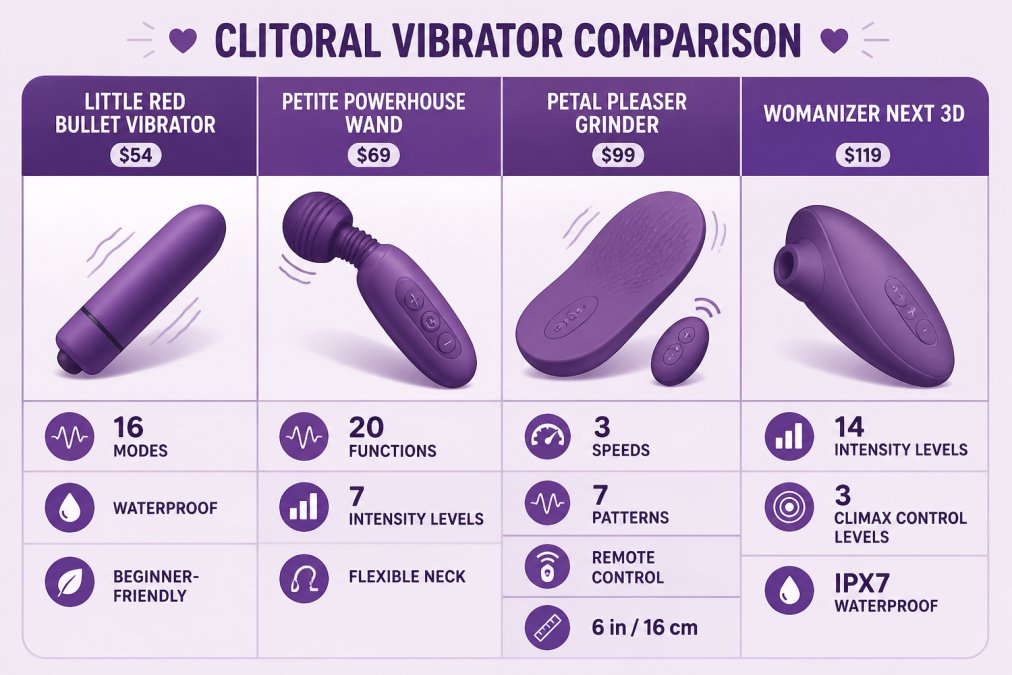
Our Little Red Bullet Vibrator has 16 vibration settings and a body-safe silicone shell. If you want something with more range, the Petite Powerhouse Wand offers 20 functions with a flexible neck that lets you control pressure without gripping hard.
For a different sensation entirely, air-pressure toys like the Womanizer Next stimulate without direct contact.
5. Train Your Arousal Response With Breath and Full-Body Touch
Arousal is a blood-flow event, and blood flow responds to relaxation. If your shoulders are up by your ears and you're holding your breath, your body isn't going to cooperate no matter how good the technique is.
Try this sequence before you go anywhere near your clitoris:
Pleasure Serum - Magic Bean Cream →
- Lie down and take ten slow breaths, exhaling longer than you inhale
- Massage your thighs, stomach, and breasts with no goal in mind
- Add breast stimulation and gentle anal or vaginal stimulation if it appeals
- Only then move toward the clitoris
Full-body stimulation builds the arousal that makes clitoral touch feel stronger. Skipping it is why so many people report that direct stimulation feels like nothing some days.
Breath also matters during. Holding your breath tightens your pelvic floor and cuts off the sensation you're chasing.
6. Understand Clitoral Sensitivity Changes (Hormones, Meds, and Life Stages)
Clitoral sensitivity changes are shifts in how strongly your nerve endings respond to touch. They are not the same thing as low libido, low arousal, or difficulty reaching orgasm, and untangling those four is the first step toward fixing the right one.
- Clitoral sensitivity: how much sensation you register from touch
- Libido: how interested in sex you feel
- Arousal: blood flow, lubrication, and physical readiness
- Orgasm difficulty: how hard it is to reach climax once aroused
They influence each other, but they're separate systems. You can have sky-high libido and dull sensation, or zero interest and a clitoris that still responds to vibration.
The Common Causes Nobody Lists
Most articles stop at "hormones." That's one lane. Here are the others worth knowing:
- Hormonal shifts, menopause, perimenopause, postpartum, and the years around them can thin and dry vaginal and clitoral tissue. Estrogen decline is the usual suspect.
- Medications, this is the big one. SSRIs and other antidepressants are well known for blunting genital sensation and delaying orgasm. So can some blood pressure medications, antihistamines, and hormonal contraceptives. If the timing lines up with a new prescription, that's a clue, not a coincidence.
- Health conditions, diabetes and other conditions that affect circulation or nerve function can reduce sensation over time. So can pelvic floor issues, which sometimes present as numbness or pain rather than weakness.
- Stress and sleep, the nervous system has to be in a parasympathetic (rest-and-digest) state for arousal to build. Chronic stress and poor sleep keep you in the opposite gear.
- Skin and tissue factors, eczema, lichen sclerosus, and other dermatologic conditions can change how tissue feels and responds.
When to Talk to a Healthcare Professional
Self-experimentation is great for the everyday stuff. It's the wrong tool for these:
- Sensitivity dropped suddenly rather than gradually
- You have pain, burning, or numbness alongside the change
- The change lines up with a new medication, a clinician can review your prescriptions and discuss alternatives or dose adjustments
- You have accompanying symptoms like unusual discharge, bleeding, or pelvic pain
- The change is affecting your quality of life and nothing you've tried has moved the needle
A clinician can check for treatable causes, review your meds, and rule out conditions that don't show up in a Google search. The American College of Obstetricians and Gynecologists publishes patient guidance on sexual function concerns worth bringing to that conversation, and the Cleveland Clinic's overview of sexual health and hormones is a solid primer on how hormonal changes affect genital sensation.
7. Support the Tissue: Hydration, Circulation, and Everyday Habits
Clitoral tissue is skin and nerve tissue, and it benefits from the same basics as the rest of your body: hydration, circulation, and not being dried out by harsh products.
Daily intimate moisturizers with hyaluronic acid support tissue hydration over time, which matters more as you age. Our Nourishing Drops blend hyaluronic acid, probiotics, and botanicals for exactly that purpose, and they're designed for external use as part of a daily routine.

Beyond products, the boring stuff works:
- Drink enough water
- Move your body most days for circulation
- Skip heavily scented soaps and douches near intimate tissue
- Get enough sleep, since fatigue flattens arousal response
Conclusion: Pick Two, Not Seven
Reading seven approaches and trying all seven at once is the fastest way to end up overwhelmed and disappointed. Pick two: one technique change and one product.
Start with better touch and a quality lubricant, since those cost the least and change the most. Add a clitoral sensitivity cream or a targeted toy once you know what your body actually responds to.
The Flirty Femme offers a curated selection of intimate wellness products designed to enhance your personal pleasure and connection.
Frequently Asked Questions
What is a good cream for clitoral sensitivity?
Look for a topical serum or oil with ingredients like L-arginine, peppermint, and aloe, which are used in products marketed to heighten sensitivity and create a tingling sensation. The Flirty Femme's Pleasure Serum combines aloe, peppermint, and L-arginine in an aloe-based formula that applies smoothly and absorbs before play. Patch-test on your inner arm first, since peppermint and capsicum-type ingredients can feel intense on sensitive skin. Skip anything that burns, and stop using it if irritation lasts.
Can clitoral sensation be restored?
Sometimes, depending on the cause. If reduced feeling comes from dryness, friction, or a temporary medication side effect, addressing that factor often helps. Nerve-related changes are more complex. There is no guaranteed fix, and topical products marketed for sensitivity do not regrow nerves. A healthcare professional can help identify whether the cause is hormonal, medication-related, or something else, and what options exist. Be skeptical of anything promising a permanent cure.
Why might clitoral sensitivity change?
Common contributors include hormonal shifts (menopause, postpartum, birth control changes), medications such as certain antidepressants, reduced blood flow, vaginal dryness, stress, and simply getting older. These changes are separate from libido and from your ability to orgasm, even though they often get lumped together. Tracking when you noticed the change, plus anything new in your routine or prescriptions, gives a clinician useful information to work with.
Can stress or medication affect clitoral sensation?
Yes. High stress narrows your focus and reduces blood flow, which can dull physical sensation even when nothing is wrong with the tissue itself. Certain medications, especially SSRIs and some blood pressure drugs, are well known for affecting sexual response, including sensation and orgasm. Never stop a prescription on your own. Ask your prescriber about timing, dosage, or alternatives, and mention the specific change you've noticed.
How can I explore clitoral stimulation without discomfort?
Start indirect. The clitoral tip is often too sensitive for direct pressure at first, so try strokes around it, over the hood, or through underwear. Use plenty of lubricant, keep pressure light, and vary rhythm rather than going harder. A bullet vibrator on its lowest setting gives you adjustable, consistent stimulation without hand fatigue. If anything stings or feels sharp, stop and reassess. Discomfort is information, not a challenge to push through.